


🇹🇭✨ Understanding “Sai Mu” (สายมู) and “Mu Te Lu” (มูเตลู): A Little Thai Cultural Context for International Fans
As we get ready for Love in the Fast Lane, there’s a Thai expression you’ll probably hear quite often: “Sai Mu” (สายมู), which comes from the term “Mu Te Lu” (มูเตลู).
Since Pakwan is described as a “Sai Mu” girl, I thought it would be fun to share a little cultural background to help international fans understand what this means.
🔮 What Does “Sai Mu” Mean?
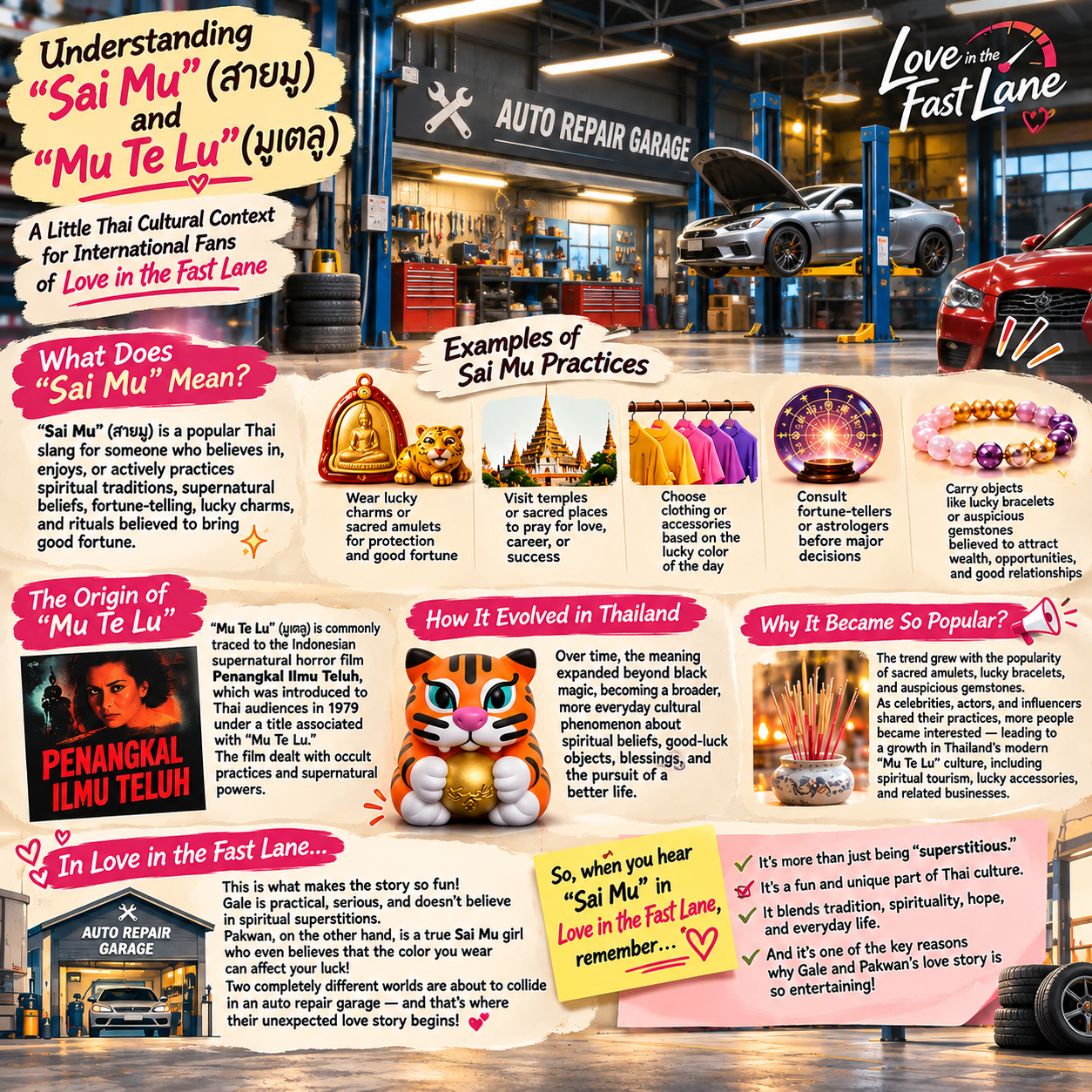
In Thailand, “Sai Mu” is a popular slang expression used to describe someone who believes in, enjoys, or actively practices spiritual traditions, supernatural beliefs, fortune-telling, lucky charms, and rituals believed to bring good fortune.
The word “Sai” (สาย) can loosely mean a type of person, group, or someone who is particularly into something.
So, calling someone “Sai Mu” is a playful way of saying that they’re really into spiritual beliefs and good-luck practices.
For example, a Sai Mu person might:
🍀 Wear lucky charms or sacred amulets for protection and good fortune.
💖 Visit temples or sacred places to pray for love, relationships, or career success.
🎨 Choose clothing or accessories based on the lucky color of the day.
🔮 Consult fortune-tellers or astrologers before making important decisions.
💰 Carry objects believed to attract prosperity, business opportunities, or financial success.
Of course, not everyone who follows these practices believes in exactly the same things. Some take them very seriously, while others simply enjoy them as part of everyday Thai culture.
✨ Where Does “Mu Te Lu” Come From?
The expression “Mu Te Lu” is commonly traced to an Indonesian supernatural horror film, Penangkal Ilmu Teluh, which was introduced to Thai audiences in 1979 under a title associated with “Mu Te Lu.”
The film dealt with occult practices and supernatural powers, giving the expression a much darker meaning in its early usage.
Over time, however, the meaning evolved in Thailand.
Rather than referring only to occult practices or black magic, “Mu Te Lu” gradually became a broader, more everyday expression associated with spiritual beliefs, lucky objects, blessings, and the pursuit of good fortune.
🌟 How Did “Sai Mu” Become So Popular in Thailand?
The trend grew alongside the popularity of sacred amulets, protective talismans, lucky bracelets, and auspicious gemstones.
As Thai celebrities, actors, and social media influencers began sharing their favorite lucky charms and spiritual practices, these traditions became increasingly visible, especially among younger generations.
People became interested in objects and rituals believed to attract wealth, improve career opportunities, strengthen relationships, or provide protection.
This also contributed to the growth of Thailand’s modern “Mu Te Lu” culture, including spiritual tourism, lucky accessories, and businesses inspired by traditional beliefs.
❤️ So, What Does This Mean for Pakwan in Love in the Fast Lane?
This is what makes the contrast between Pakwan and Gale so entertaining!
Gale is practical, serious, hardworking, and doesn’t believe in spiritual superstitions.
Pakwan, on the other hand, is a Sai Mu girl who believes that even the color you wear on a particular day can influence your luck!
One believes in logic and practical solutions.
The other believes that a little spiritual guidance and good fortune can make a difference.
And somehow, these two completely different worlds are about to collide in an auto repair garage! 🚗💕
That’s part of the charm of Thai romantic comedies: cultural differences, contrasting personalities, and unexpected love stories.
So, whenever you hear the word “Sai Mu” in Love in the Fast Lane, you’ll know that it’s much more than simply being “superstitious.”
It’s a playful expression connected to a rich and evolving part of Thai culture, where tradition, spirituality, hope, and everyday life often come together.
🇹🇭❤️ Just a little Thai cultural context from my perspective, to help international fans enjoy the story even more!